
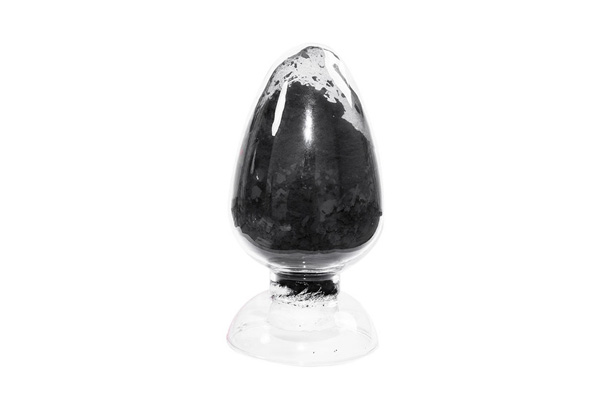
Copper Oxide (Chemical Formula: CuO) is a premium black copper oxide powder. It is slightly amphoteric and mildly hygroscopic. The product is thermally stable and decomposes to release oxygen at high temperatures. It is insoluble in water and ethanol but readily soluble in acids. Due to its outstanding physicochemical properties, it is extensively used in numerous industrial sectors, including rayon manufacturing, ceramic glazes and enamels, battery materials, petroleum desulfurizers, pesticides, hydrogen production, catalysts, and specialty glass.
| Test Item | Specification | Test Item | Specification |
| CuO | ≥ 99.0 % | HCl Insoluble Matter | ≤ 0.15 % |
| Cl | ≤ 0.015 % | Sulfate | ≤ 0.1 % |
| Fe | ≤ 0.1 % | Water Soluble Matter | ≤ 0.1 % |
Physicochemical Properties
Physical Properties:
Appearance: Black or brownish-black powder
Density: 6.31 g/cm³
Melting Point: 1446 ℃
Refractive Index: 2.63
Solubility: Insoluble in water and alcohols; soluble in dilute acids, ammonium chloride, ammonium carbonate, and potassium cyanide; slowly soluble in ammonia water to form coordination compounds.
Chemical Properties:
Reduction Reaction: Can undergo reduction reactions with carbon, carbon monoxide, and hydrogen to produce elemental copper.
Reaction with Acids: Reacts with dilute sulfuric acid or hydrochloric acid to form the corresponding copper salts and water.
Main Applications
General Industrial & Chemical Applications:
Catalysis & Analysis: Used as a catalyst in organic synthesis, an analytical reagent (for nitrogen determination), an oxidizing agent, and for carbon determination in organic compounds.
Coloring & Polishing: Acts as an excellent colorant in the glass, enamel, and ceramic industries; a polishing agent for optical glass; and an anti-wrinkle agent for paints.
Manufacturing & Purification: Used in the manufacture of dyes, organic catalyst carriers, artificial gemstones, and other copper compounds (as a raw material for copper salts); serves as a desulfurizer in rayon manufacturing and oil refining.
Advanced Materials: Serves as a crucial inorganic material in the fields of catalysis, superconductivity, and advanced ceramics.
Energy & Batteries: Used as an electrode active material, a catalyst and its carrier; also applied as a burning rate catalyst for rocket propellants.
Fine Chemicals: Applied in gas analysis and the determination of organic compounds; acts as a highly efficient oil desulfurizer and hydrogenating agent.
Storage & Transportation Safety Guidelines
Storage Requirements: Must be stored in a cool, well-ventilated warehouse. Keep away from fire and heat sources. Strictly prohibited from mixed storage with reducing agents, alkali metals, and edible chemicals; must be stored separately. The storage area should be equipped with suitable materials to contain spills.
Transportation Regulations: Packaging must be intact and securely loaded at the time of shipment. Ensure containers do not leak, collapse, fall, or sustain damage during transport. Mixed transport with reducing agents, alkali metals, and edible chemicals is strictly prohibited. Protect from direct sunlight, rain, and high temperatures during transit. Vehicles must be thoroughly cleaned after transport is completed.