
HPMC (Hydroxypropyl Methyl Cellulose) is one of the most widely used functional additives in cement-based tile adhesive formulations.
Although its dosage represents only a small percentage of the complete dry-mix formulation, HPMC can significantly influence water retention, consistency, workability, open time and anti-sag behavior.
For this reason, selecting HPMC for tile adhesive should not be based on viscosity alone.
A 200,000 mPa·s HPMC is not automatically better than a 100,000 mPa·s grade. The appropriate product depends on the tile adhesive formulation, cement, aggregate grading, redispersible polymer powder (RDP), application method, climate and required performance.
This guide explains what HPMC does in tile adhesive and how to select an appropriate grade for practical formulation development.
1. What Is HPMC?
HPMC stands for Hydroxypropyl Methyl Cellulose.
It is a non-ionic cellulose ether derived from cellulose through chemical modification.
Construction-grade HPMC is generally supplied as a white or off-white powder and is widely used in dry-mix construction materials such as:
Tile adhesive
Wall putty
Cement plaster
Masonry mortar
Repair mortar
EIFS/ETICS mortars
Gypsum-based products
Self-leveling compounds
Other cementitious dry-mix products
When HPMC is dispersed and dissolved in water, it modifies the viscosity and rheological behavior of the aqueous phase.
This characteristic is particularly important in tile adhesive.
2. Why Is HPMC Used in Tile Adhesive?
A cement-based tile adhesive needs to perform several functions at the same time.
It should be easy to mix, spread smoothly with a notched trowel, remain workable for an appropriate period and provide sufficient time for tiles to be positioned.
At the same time, excessive vertical movement of the tile should be controlled.
HPMC contributes to several of these fresh-mortar characteristics.
Its main functions in tile adhesive include:
Water retention
Thickening
Rheology modification
Improved workability
Influence on open time
Anti-sag support
Control of mortar consistency
However, HPMC does not provide all tile adhesive properties by itself.
A complete tile adhesive formulation normally includes cement, graded aggregates, HPMC, redispersible polymer powder and, depending on the formulation, other functional additives.
3. Water Retention: One of the Key Functions of HPMC
Water retention is one of the most important reasons HPMC is used in cement-based tile adhesive.
After tile adhesive is applied to a wall or floor, water can be lost through:
Absorption by the substrate
Evaporation
Absorption by porous tiles
High ambient temperature
Low relative humidity
If water disappears too quickly, cement may not have sufficient available moisture for normal hydration in the application zone.
HPMC helps reduce rapid water migration from the fresh mortar.
This allows the tile adhesive to maintain moisture for a longer period.
4. Why Is Water Retention Important for Tile Adhesive?
Imagine applying tile adhesive onto a highly absorbent cement board during hot, dry weather.
Without adequate water retention, the substrate can rapidly draw water from the adhesive.
The surface of the applied mortar may then lose workable characteristics sooner than expected.
Appropriate water retention can help maintain a more stable working condition during application.
However, water retention should still be considered together with the entire formulation.
Higher water retention is not automatically equivalent to better overall tile adhesive performance.
5. How Does HPMC Affect Workability?
Professional tile installation involves repeated troweling and spreading.
The mortar therefore needs suitable consistency and resistance during application.
HPMC modifies the rheology of the fresh adhesive and can influence:
Mixing behavior
Trowel feel
Spreadability
Mortar consistency
Wet mortar stability
If the system is too thin, application may become difficult and sagging can increase.
If the system is excessively thick, troweling resistance may become too high and spreading can require unnecessary effort.
The objective is therefore not maximum viscosity.
It is appropriate rheology for the intended application.
6. HPMC and Open Time
Open time is an important performance parameter for tile adhesive.
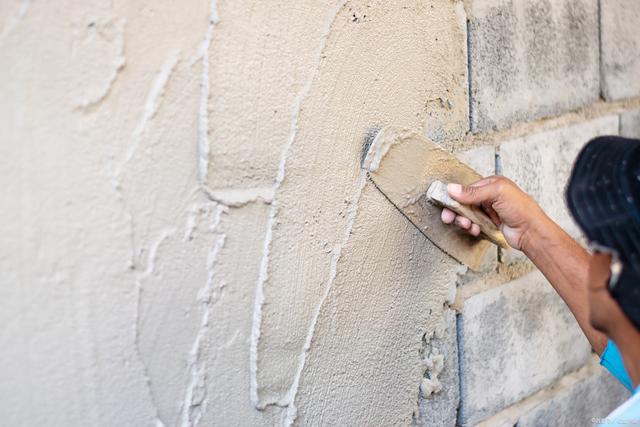
After adhesive is spread on the substrate, the installer needs sufficient time to place and adjust the tile.
HPMC can influence open-time behavior by helping control moisture loss from the applied mortar.
However, open time is not controlled by HPMC alone.
It can also be affected by:
Cement type
HPMC grade
HPMC dosage
RDP type and dosage
Water demand
Ambient temperature
Relative humidity
Substrate absorption
Tile characteristics
Other formulation additives
For this reason, open time should be measured on the complete tile adhesive formulation rather than predicted from HPMC viscosity alone.
7. How Does HPMC Affect Anti-Sag Performance?
When tiles are installed vertically, excessive downward movement after placement is undesirable.
HPMC contributes to the rheological structure of the fresh adhesive and therefore plays a role in controlling sag.
However, simply increasing HPMC viscosity or dosage is not always the best solution.
Excessive thickening may negatively affect spreadability and application feel.
Anti-sag performance can also be influenced by other formulation components, including starch ether and aggregate grading.
A well-designed tile adhesive therefore requires a balance between:
spreadability + consistency + wet adhesion + anti-sag behavior.
8. What HPMC Viscosity Is Used for Tile Adhesive?
This is one of the most frequently asked questions when selecting construction-grade HPMC.
Commercial HPMC is available in a wide range of viscosities.
For tile adhesive, medium-to-high viscosity grades are commonly evaluated, including products around 100,000 mPa·s and higher-viscosity grades depending on the viscosity measurement method and formulation.
However, viscosity numbers from different suppliers cannot always be compared directly.
The measured value depends on factors such as:
Solution concentration
Measurement temperature
Viscometer
Spindle and speed
Testing procedure
Therefore:
“100,000 mPa·s” from Supplier A is not necessarily directly comparable with “100,000 mPa·s” from Supplier B unless the test methods are equivalent.
9. Is 200,000 mPa·s HPMC Better Than 100,000 mPa·s?
Not necessarily.
This is a common misunderstanding in HPMC purchasing.
A higher nominal viscosity can provide stronger thickening under specified test conditions, but tile adhesive performance depends on much more than solution viscosity.
A higher-viscosity grade may increase consistency and anti-sag characteristics in one formulation.
In another formulation, it may create excessive troweling resistance or reduce desirable spreadability.
Similarly, a 100,000 mPa·s product may perform very well in a properly balanced formulation.
The better question is therefore not:
“Which HPMC has the highest viscosity?”
It is:
“Which HPMC provides the required water retention and rheology in my tile adhesive formulation?”
10. How Much HPMC Is Used in Tile Adhesive?
There is no universal HPMC dosage for all tile adhesive formulations.
The required amount depends on:
HPMC grade
HPMC viscosity
Cement content
Aggregate grading
Water demand
RDP dosage
Other additives
Required open time
Required anti-sag performance
Application conditions
In practical formulation development, HPMC is generally used at a relatively low percentage of the total dry mix.
Even small dosage changes can noticeably alter mortar consistency and water demand.
For this reason, laboratory testing is recommended rather than copying a fixed dosage from another formulation.
11. What Happens If Too Much HPMC Is Added?
Increasing HPMC dosage can increase viscosity and water retention, but more HPMC does not automatically mean better tile adhesive.
Excessive HPMC may lead to:
Excessively high wet-mortar viscosity
Increased troweling resistance
Reduced spreadability
Higher water demand
Changes in setting or drying behavior
Unnecessary formulation cost
The optimum dosage should therefore be determined according to target performance.
12. What Happens If HPMC Dosage Is Too Low?
If the HPMC level is insufficient for the formulation, possible issues may include:
Insufficient water retention
Rapid moisture loss
Low mortar consistency
Poor application stability
Shorter practical working time
Increased sag tendency in some formulations
Again, these symptoms are not exclusively caused by HPMC.
Cement, sand grading, RDP and water demand should also be checked during troubleshooting.
13. HPMC and RDP: What Is the Difference?
HPMC and Redispersible Polymer Powder (RDP) are often used together in tile adhesive, but they perform different functions.
HPMC primarily contributes to:
Water retention
Thickening
Rheology control
Workability
Open-time behavior
Anti-sag characteristics
RDP primarily contributes to polymer modification, including:
Adhesion-related performance
Flexibility
Deformability
Cohesion
Performance after hardening
Therefore, HPMC and RDP are complementary rather than interchangeable.
Reducing RDP and simply increasing HPMC does not provide the same result.
Similarly, increasing RDP cannot replace the water-retention and rheology functions of HPMC.
14. Why Are HPMC and RDP Often Used Together?
Tile adhesive needs suitable performance in both its fresh and hardened states.
HPMC mainly helps control the behavior of fresh mortar during mixing and application.
RDP contributes important polymer modification after the dry powder is mixed with water and subsequently hardens.
A simplified way to understand their roles is:
HPMC → water retention and fresh-mortar rheology
RDP → polymer modification and hardened-performance contribution
This is why both materials are commonly found in modern dry-mix tile adhesive formulations.
15. HPMC and Starch Ether in Tile Adhesive
Starch ether is another additive that may be used in certain tile adhesive formulations.
It can have a strong influence on rheological characteristics even at relatively low dosage.
HPMC and starch ether should not be considered identical products.
Depending on the formulation, starch ether may be used together with HPMC to adjust:
Anti-sag behavior
Application feel
Wet mortar rheology
Troweling characteristics
Because the interaction can be significant, dosage should be determined experimentally.
16. Does HPMC Affect Tile Adhesive Water Demand?
Yes, HPMC can influence the amount of water required to achieve a target consistency.
Different HPMC grades may produce different water demands even when their nominal viscosities appear similar.
This is important because changing mixing water can influence many aspects of the tile adhesive.
When comparing two HPMC samples, it is therefore useful to evaluate them both at:
The same water dosage, and
Comparable target mortar consistency.
This provides more meaningful formulation information than comparing solution viscosity alone.
17. Why Can Two HPMC Products with the Same Viscosity Perform Differently?
Nominal viscosity is only one characteristic of HPMC.
Two products labeled with the same viscosity can behave differently in tile adhesive because of differences in:
Degree of substitution
Molar substitution
Molecular-weight distribution
Surface treatment
Modification technology
Particle size
Dissolution behavior
Water-retention characteristics
Manufacturing consistency
This explains why replacing HPMC purely according to the viscosity number can sometimes change the behavior of a tile adhesive formulation.
18. What Specifications Should Buyers Check?
When purchasing HPMC for tile adhesive, viscosity is important, but it should not be the only specification considered.
Depending on the product and application, buyers may evaluate:
Viscosity
Always confirm the testing method before comparing values.
Moisture
Moisture influences storage and actual product composition.
Ash Content
Ash can be used as one reference parameter when evaluating product characteristics and consistency.
pH
The pH of the specified HPMC solution may be included in quality-control specifications.
Gel Temperature
Thermal gelation characteristics can be relevant to construction-grade cellulose ethers.
Particle Size
Particle size can influence dispersion and dissolution behavior.
Water Retention
For tile adhesive applications, practical water-retention performance is particularly important.
19. How Should HPMC Samples Be Compared?
A practical HPMC evaluation should go beyond laboratory viscosity.
A useful comparison can include:
Step 1: Check basic specifications
Compare viscosity, moisture, ash, pH and other relevant COA parameters.
Step 2: Use the same tile adhesive formulation
Keep cement, sand, RDP and other additives unchanged.
Step 3: Compare mixing behavior
Observe wetting, dispersion, lump formation and required mixing time.
Step 4: Evaluate fresh mortar
Compare consistency, troweling feel, spreadability and anti-sag behavior.
Step 5: Evaluate water retention and open time
Use appropriate test methods according to the target product standard.
Step 6: Evaluate final tile adhesive performance
Where applicable, test adhesion and other required properties according to relevant standards.
This provides much more useful information than simply comparing HPMC viscosity.
20. Common Problem: Tile Adhesive Dries Too Quickly
If tile adhesive loses water too rapidly after application, possible causes include:
Insufficient HPMC dosage
Inappropriate HPMC grade
Highly absorbent substrate
High temperature
Low humidity
Excessive air movement
Formulation imbalance
Increasing HPMC may help in some cases, but the complete system should be evaluated before changing the formulation.
21. Common Problem: Tile Adhesive Is Too Sticky or Heavy to Trowel
Excessive troweling resistance may be associated with:
HPMC viscosity being too high
Excessive HPMC dosage
Incorrect water dosage
Starch ether level
Aggregate grading
Other rheology modifiers
This is a good example of why “higher viscosity” does not always mean “better performance.”
22. Common Problem: Tiles Sag After Installation
Possible factors include:
Insufficient rheological structure
HPMC selection
HPMC dosage
Starch ether dosage
Excessive mixing water
Aggregate grading
Tile weight and size
The solution should therefore be based on formulation testing rather than adjusting only one raw material.
23. How to Select HPMC for Tile Adhesive
Before selecting an HPMC grade, it is useful to answer several questions:
What type of tile adhesive is being produced?
What cement is used?
What is the aggregate particle-size distribution?
Is RDP included?
Is starch ether included?
What mixing-water level is targeted?
What consistency is required?
What open time is required?
How important is anti-sag performance?
What are the typical application temperature and humidity?
Is the product intended for wall or floor installation?
Which performance standard must the finished tile adhesive meet?
Once these conditions are clear, HPMC grades can be compared more effectively.
24. HPMC Selection for Different Tile Adhesive Formulations
There is no single HPMC grade that is ideal for every tile adhesive.
A basic cementitious tile adhesive may prioritize economical water retention and workability.
A formulation designed for larger tiles may have different rheology and application requirements.
A high-performance polymer-modified adhesive may require careful compatibility between HPMC and RDP.
For this reason, HPMC should be treated as part of the complete formulation rather than as an isolated ingredient.
25. Frequently Asked Questions About HPMC for Tile Adhesive
Is HPMC necessary in tile adhesive?
HPMC is widely used in cement-based dry-mix tile adhesive because of its water-retention and rheology-modifying functions. The exact formulation depends on the product system and performance requirements.
What viscosity HPMC is suitable for tile adhesive?
Medium-to-high viscosity construction grades are commonly evaluated, but the appropriate viscosity depends on formulation and test method. Nominal viscosity alone should not determine product selection.
Does higher HPMC viscosity improve adhesion?
Not necessarily. HPMC mainly influences water retention and fresh-mortar rheology. Final adhesion depends on the entire formulation, including cement hydration, polymer modification, application conditions and other factors.
Can HPMC replace RDP?
No. HPMC and RDP perform different functions and should not be treated as direct substitutes.
Can RDP replace HPMC?
No. RDP does not provide the same water-retention and rheology-control functions as cellulose ether.
How should HPMC dosage be determined?
Start from an appropriate formulation range and evaluate the actual tile adhesive through laboratory testing. The final dosage should be based on water retention, consistency, workability, open time and other required performance.
26. Conclusion
HPMC is an important functional additive in cement-based tile adhesive, but selecting the right product involves much more than choosing the highest viscosity.
An appropriate HPMC grade should provide a balance of:
water retention + workable consistency + suitable open time + anti-sag behavior + acceptable troweling performance.
Its performance also depends on cement, aggregate grading, RDP, starch ether, water dosage, temperature and other formulation variables.
For this reason, comparing HPMC products using the actual tile adhesive formulation is generally more meaningful than comparing viscosity numbers alone.
For manufacturers and formulators, the most practical approach is to define the required performance first and then select HPMC viscosity, modification type and dosage through systematic formulation testing.