
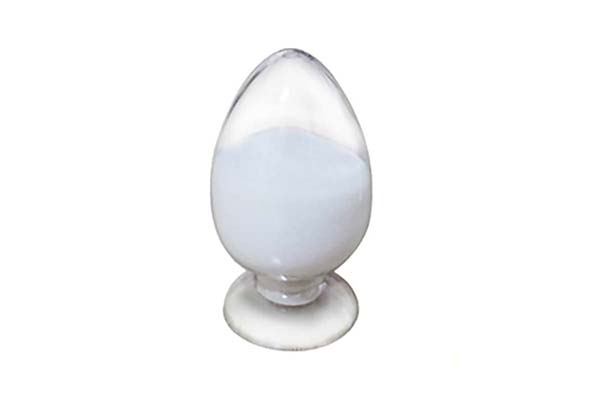
Calcium lignosulfonate, commonly known as "Calcium lignosulphonate," with CAS number 8061-52-7, is an anionic surfactant derived from natural lignin. As a versatile and widely available industrial additive, calcium lignosulfonate finds applications in construction, metallurgy, ceramics, agriculture, animal feed, environmental protection, and many other fields. This article provides a comprehensive introduction to its chemical properties, working mechanism, technical specifications, major applications, and usage guidelines.
Table of Contents
- I. What Is Calcium Lignosulfonate?
- II. Technical Specifications & Physicochemical Properties
- III. Working Mechanism: How Does It Act as Both a Dispersant and a Binder?
- IV. Six Major Application Fields Explained
- V. Usage Methods & Precautions
- VI. Packaging, Storage & Transportation
- VII. Frequently Asked Questions (FAQ)
I. What Is Calcium Lignosulfonate?
Calcium lignosulfonate is a polymer electrolyte produced from the spent liquor generated during the sulfite pulping process. The raw material undergoes neutralization, concentration, and spray drying to produce the finished product. Its molecular structure is built on a phenylpropane backbone, with numerous sulfonic acid groups (-SO₃H) and carboxyl groups attached to the side chains, giving it excellent water solubility and surface activity.
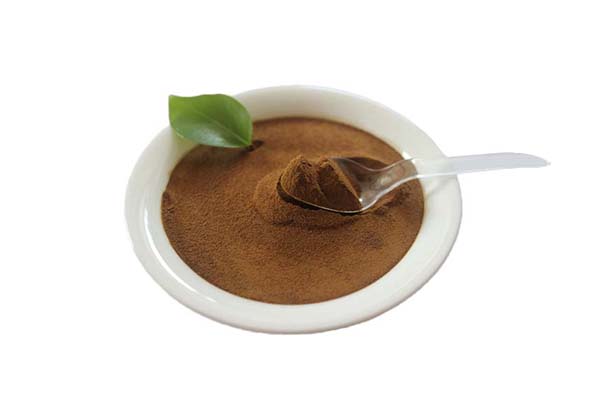
In appearance, calcium lignosulfonate is typically a yellowish-brown to brown powder. It dissolves readily in water, forming a slightly acidic solution (pH 4.5–6.5) with good chemical stability. It is non-toxic, non-flammable, and non-explosive — an environmentally friendly natural polymer material.
Quick Reference
Chinese Name: 木质素磺酸钙(木钙)
English Name: Calcium Lignosulfonate
CAS No.: 8061-52-7
Molecular Formula: C₂₀H₂₄CaO₁₀S₂
Molecular Weight: 528.61
Appearance: Brownish-yellow powder
II. Technical Specifications & Physicochemical Properties
The quality of calcium lignosulfonate can be measured by the following key specifications:
| Test Item | Specification |
|---|---|
| Appearance | Brownish-yellow / light yellow powder |
| Dry Matter Content | ≥93% |
| Moisture | ≤7.0% |
| pH Value | 4.5–6.5 |
| Water-Insoluble Matter | ≤1.5% |
| Lignosulfonate Content | ≥60% |
| Total Reducing Substances | ≤12% |
| Solubility | Freely soluble in water |
In terms of physicochemical properties, calcium lignosulfonate has a bulk density of approximately 0.35 g/cm³ and belongs to the class of anionic surfactants. It is chemically stable under normal temperature and pressure conditions but is incompatible with strong oxidizing agents. Its molecular structure contains both a non-polar lignin backbone and hydrophilic sulfonate groups — this "amphiphilic" structure gives it unique interfacial activity.
III. Working Mechanism: How Does It Act as Both a Dispersant and a Binder?
Calcium lignosulfonate serves simultaneously as a "dispersant" and a "binder" in industrial applications. These seemingly contradictory functions stem from the different behaviors of its molecular structure under varying conditions.
3.1 Mechanism as a Dispersant
When introduced into a solid-liquid system, calcium lignosulfonate molecules adsorb onto the surface of solid particles in a directional manner. The hydrophilic sulfonate groups face the aqueous phase and ionize, imparting a negative charge to the particle surfaces. Due to electrostatic repulsion between like-charged particles, agglomerated particle clusters are broken apart and evenly dispersed. In concrete, this mechanism effectively disperses cement particles, releasing free water trapped within the flocculated structure, thereby improving concrete workability without increasing the water content.
3.2 Mechanism as a Binder
Under conditions of high particle concentration or limited liquid medium, the long-chain polymeric structure of calcium lignosulfonate can form physical "bridges" between separate particles, binding discrete particles into a cohesive mass and providing green strength or binding force. This property is particularly valuable in ore pelletizing, refractory material shaping, and feed pelleting operations.
IV. Six Major Application Fields Explained
4.1 Concrete Water Reducer (Construction)
Concrete admixtures represent one of the largest application areas for calcium lignosulfonate. When used as a water reducer at a dosage of 0.25%–0.3% of cement weight, it can reduce mixing water by 10%–14%, significantly improving concrete workability and engineering quality.
Its main benefits include:
- Improved Fluidity: Disperses cement particles and releases trapped water, increasing slump;
- Lower Hydration Heat: Provides a retarding effect that reduces early cement hydration heat, beneficial for mass concrete construction;
- Enhanced Durability: Causes no rusting of reinforcement; improves frost resistance and impermeability of concrete;
- Compatible with Other Admixtures: Typically combined with high-efficiency water reducers during summer construction to control slump loss.
Note: Calcium lignosulfonate can serve as a base component for compound admixtures. By combining it with early-strength agents, antifreeze agents, air-entraining agents, and other components, specialized admixture products can be developed for different environmental and construction requirements. Its excellent water solubility also facilitates the preparation of liquid admixtures.
4.2 Ore Binder (Metallurgy)
In the metallurgical industry, calcium lignosulfonate is used as an ore powder binder. When mixed with ore powder and formed into pellets, then dried and fed into furnaces for smelting, it improves pellet strength and thermal stability, thereby enhancing material utilization and recovery rates during smelting. This application is particularly common in iron ore pellet production.
4.3 Refractory Materials & Ceramics
In the refractory materials sector, calcium lignosulfonate is used as a dispersant and binder to improve the workability of bricks and tiles, while achieving three effects simultaneously: water reduction, strength enhancement, and crack prevention.
In ceramic production, its benefits include:
- Reducing green body carbon content and improving body strength;
- Reducing the amount of plastic clay required;
- Improving slurry fluidity;
- Increasing product yield and shortening sintering time.
During manufacturing, when the addition amount is 0.2%–0.8% of the dry body material, the ceramic body strength can be significantly improved. However, the heating rate should not be too fast to avoid surface bubbling.
4.4 Feed Binder
In the feed industry, calcium lignosulfonate is used as a pellet binder to improve feed pellet strength, reduce fines and return rates, and help lower production costs. According to available data, the allowable inclusion rate in feed in the United States and Canada is up to 4.0%.
4.5 Pesticide & Dye Dispersant
Calcium lignosulfonate serves as a dispersant and emulsifier in pesticide processing, particularly for wettable powder formulations, helping active ingredients disperse evenly and improving suspension stability and efficacy. In the dye and pigment industry, it functions as a diffusing agent, enhancing dye particle dispersion uniformity and dyeing fastness.
4.6 Other Applications
In addition to the major fields above, calcium lignosulfonate is also used in the following applications:
- Briquette Pressing: As a binder to improve coal powder forming performance;
- Dust Control: For road and mining area dust suppression through wetting and binding;
- Foundry Industry: As an auxiliary binder for sand casting, enhancing mold strength while ensuring collapsibility;
- Leather Industry: Used as a tanning filler;
- Carbon Black Granulation: Promoting carbon black pellet formation;
- Coal-Water Slurry: As a dispersant to improve slurry fluidity;
- Soil Improvement: Improving soil structure, water retention, and aeration;
- Electrolytic Refining: As a refining aid to improve metal electrodeposition quality.
V. Usage Methods & Precautions
5.1 Concrete Water Reducer Usage
- Recommended dosage: 0.25%–0.3% of cement weight; adjust based on mix design trials;
- Can be added directly in powder form or first dissolved in water;
- When combined with high-efficiency water reducers, determine the optimal ratio through testing;
- Construction temperature should be above 5°C.
5.2 Usage in Other Fields
In different application scenarios, the dosage and usage method of calcium lignosulfonate vary. It is recommended to conduct small-scale trials based on specific process conditions to determine the optimal dosage.
5.3 Precautions
- The product is non-toxic, but prolonged skin contact should be avoided;
- Do not store together with strong oxidizing agents;
- If the product becomes caked due to moisture, it can still be used normally after crushing or dissolving — effectiveness will not be affected.
VI. Packaging, Storage & Transportation
| Item | Description |
|---|---|
| Packaging | Double-layer packaging: inner plastic film + outer polypropylene woven bag; 25 kg/bag or 550 kg/bag (customizable upon request) |
| Storage Conditions | Store in a dry, well-ventilated area; keep moisture-proof |
| Shelf Life | Long-term storage without deterioration; if caked due to moisture, crush or dissolve before use |
| Transportation | Non-toxic, non-hazardous, non-flammable; suitable for truck, train, and sea freight |
VII. Frequently Asked Questions (FAQ)
Q1: What is the difference between calcium lignosulfonate and sodium lignosulfonate?
A: Both are lignosulfonate surfactants, with the main difference being the cation type. Calcium lignosulfonate contains calcium ions, making it suitable for applications that benefit from calcium (such as agricultural fertilization and feed supplementation). Sodium lignosulfonate contains sodium ions and has better solubility under alkaline conditions, making it more suitable for high-pH systems. In concrete applications, both show similar water-reducing effects, and the choice depends on specific formulation requirements.
Q2: Is calcium lignosulfonate toxic? Is it safe for humans?
A: Calcium lignosulfonate itself is non-toxic and is classified as a safe, non-flammable, non-explosive product. However, prolonged skin contact should be avoided during handling. When used in animal feed, the inclusion rate should be kept within permitted limits.
Q3: What is the optimal dosage of calcium lignosulfonate in concrete?
A: The general recommended dosage is 0.25%–0.3% of cement weight. In practice, the optimal dosage should be determined through testing, taking into account the cement type, mix ratio, and construction conditions.
Q4: Can the product still be used after becoming caked due to moisture?
A: Yes. Calcium lignosulfonate does not deteriorate during long-term storage. If it becomes caked due to moisture exposure, simply crush it or dissolve it in water — the product performance will not be affected.
Q5: How is calcium lignosulfonate manufactured?
A: It is primarily produced from the spent liquor generated during the sulfite pulping process. The spent liquor undergoes lime neutralization, biological fermentation for sugar removal, evaporation concentration to approximately 50% solid content, and finally spray drying to produce the powdered product. The entire production process achieves resource utilization of pulping by-products.
Q6: Is calcium lignosulfonate environmentally friendly?
A: Calcium lignosulfonate is derived from natural lignin, a renewable biomass resource, and is biodegradable. Its production process achieves comprehensive utilization of pulp industry by-products, aligning with the principles of resource recycling and sustainable development.